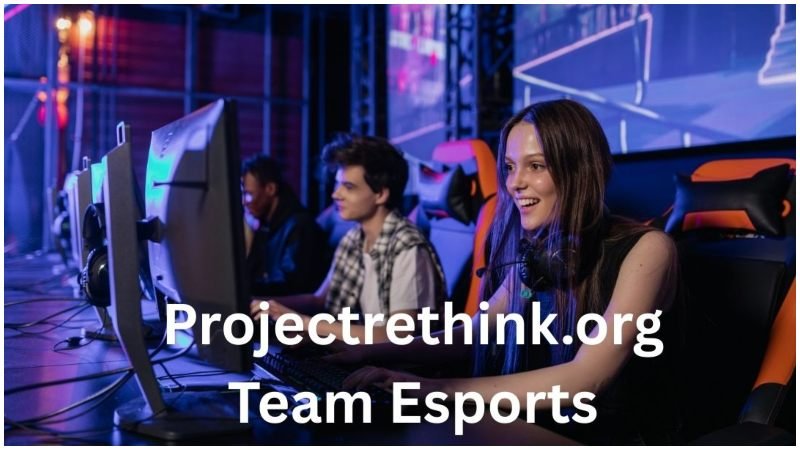
The world of esports has grown from a niche subculture into a global phenomenon. With millions of fans, billion-dollar investments, and tournaments that rival traditional sports in scale and spectacle, esports is no longer just a hobby—it’s a career, a community, and a movement.
Among the many organizations rising within this digital arena, ProjectRethink.org Team Esports stands out. Not because they dominate every leaderboard (though they are highly competitive), but because of their unique approach to gaming: blending competition, education, mental wellness, and social impact into a single, unified mission.
This article dives deep into who they are, how they operate, what they’ve achieved, and why they are helping to reshape the future of esports.
The Origin of ProjectRethink.org Team Esports
@ProjectRethink.org began as a broader initiative aimed at rethinking systems—whether in education, technology, or community development. The esports division grew from this mission, with a specific purpose: to challenge the norms of competitive gaming by creating an organization that prioritizes more than just winning.
The team was launched by a group of educators, mental health professionals, gamers, and tech innovators who saw esports as an opportunity—not just for competition, but for inclusion, learning, mentorship, and change. They believed that a gaming organization could develop talent both in-game and in life.
Structure and Team Philosophy
Unlike traditional esports teams that focus solely on gameplay and results, ProjectRethink.org employs a holistic model. Each player is supported not only by coaches and analysts, but also by wellness professionals, tutors, life coaches, and community managers.
The idea is simple: if you take care of the whole person, they’ll perform better—on the screen and off.
Inclusive Leadership and Culture
Leadership within the organization is collaborative and inclusive. Players are encouraged to participate in decision-making processes about team policies, event planning, and even recruitment. This creates a sense of ownership and belonging that fosters stronger team cohesion and accountability.
The team cultivates a culture where empathy leads, voices are valued, and emotional insight is as vital as technical skill. Toxic behavior, often tolerated or ignored in competitive environments, is actively addressed through education and consistent team standards
Education and Life Skills
Education is a priority. Players under the age of 25 are encouraged—or even required—to continue their academic learning while part of the organization.
//ProjectRethink.org provides:
• Academic tutoring
• Time management workshops
• Career development support
• Financial literacy training
This equips players not only for the next match, but for the journey far beyond the game screen.
Competitive Gaming Performance and Training System
One of the key strengths of ProjectRethink.org Team Esports is its structured approach to player development. Rather than relying solely on natural talent, the organization emphasizes consistent improvement through organized training programs. Players participate in scheduled practice sessions, strategy reviews, and performance evaluations designed to enhance both individual and team gameplay.
The training process focuses on communication, decision-making, adaptability, and game awareness. Coaches work closely with players to identify strengths and areas for improvement, helping them build the skills required to compete at a high level. This balanced approach ensures that players continue to grow while maintaining healthy gaming habits.
Community Engagement and Social Impact
ProjectRethink.org believes that esports can be a powerful tool for bringing people together. The organization regularly engages with gaming communities through online events, educational initiatives, and mentorship programs. These activities help create a welcoming environment for players from diverse backgrounds.
Beyond gaming, the team promotes positive values such as teamwork, respect, digital responsibility, and personal growth. By encouraging meaningful interactions and supporting community-driven projects, ProjectRethink.org demonstrates how esports organizations can make a positive impact beyond competitive play.
Technology and Innovation in Esports
Technology plays an important role in the success of modern esports organizations, and ProjectRethink.org embraces innovation to enhance player development. The team utilizes performance tracking tools, video analysis, and data-driven insights to evaluate gameplay and improve strategies.
These technologies allow coaches and players to better understand performance trends, identify weaknesses, and make informed decisions. By combining advanced technology with human mentorship, the organization creates an environment where players can continuously improve while staying focused on long-term development.
Why ProjectRethink.org Team Esports Stands Out
Many esports organizations focus primarily on tournament results and sponsorship opportunities. ProjectRethink.org takes a different path by placing equal importance on competitive success, education, mental wellness, and community involvement.
This balanced philosophy helps players develop not only as competitors but also as individuals. The organization’s commitment to ethical gaming, inclusivity, and personal growth sets it apart from many traditional esports teams and positions it as a forward-thinking leader within the industry.
Future Plans
ProjectRethink.org isn’t content with the status quo. They are actively planning for the future, including:
• Expanding into more games and regions
• Opening new training hubs in underserved areas
• Launching a digital esports academy with free resources
• Publishing research on mental health and player development
• Hosting international summits to promote ethical esports
Conclusion
@ProjectRethink.org Team Esports is more than just a group of gamers—it’s a blueprint for the future of competitive gaming. By combining skill, purpose, and empathy, they show that it’s possible to win while also uplifting others, protecting player well-being, and building a better gaming culture.
They are proving that when you rethink how a team operates—how it supports its players, connects with its community, and impacts the world—you can do more than win games. You can redefine what it means to play with purpose.